




 Stake 101


 Table of contents
Key takeaways
Foreigners and non-residents can own property in Dubai
Entry costs range from AED 500 (fractional) to AED 500k+ (whole unit)
Fractional investors own a legal share of the property through a special purpose vehicle (SPV)
We've completed 45 exits to date at an average gross return of 32%, and paid out over AED 250M to investors.
You can start investing in Dubai real estate with as little as AED 500. You buy a share of a specific, already-selected property, earn your portion of the rent while it's held, and your share of the profit when it sells.
You don't need to buy a whole apartment, manage tenants, or live in the UAE. Here's how it works, who can do it, and where to start.
Learn more about Stake in the Q3 2026 market report.
Want to get started? Sign up for free and view investment properties.
This guide covers who can invest, how much you need, the routes available and what the process looks like, step by step.
Can foreigners invest in Dubai real estate?
Yes. Foreigners and non-residents can own property outright in Dubai's designated freehold areas, set up under Law No. 7 of 2006 and governed by the Dubai Land Department. Freehold areas cover most of the neighbourhoods investors focus on, including Dubai Marina, Downtown Dubai, JVC, Business Bay, and JLT.
You don't need UAE residency or a visa to invest. Owning property above AED 750,000 can qualify you for a UAE residence visa, but legally, investing below that threshold is just as straightforward.
If you're investing from outside the UAE, how to invest in Dubai real estate from abroad walks through the process end to end.
If you're an Indian investor based in the UAE, one of the largest groups on our platform, see how Indians in the UAE can invest in real estate.
How much money do you need to invest in Dubai?
Anywhere from AED 500 to AED 2M or more, depending on the route you take. Here's how the entry points compare:
| Investment route | Typical minimum | Hands-on management | Income type |
|---|---|---|---|
| Whole unit (direct purchase) | AED 500K-2M+ | Yes, you're the landlord | Rent + resale |
| Off-plan property (a deposit on a unit that isn't built yet) | AED 100K+ | Yes, after handover | Resale (rent after completion) |
| UAE-listed REITs (property funds you buy shares in on a stock exchange) | ~AED 50-500 (exchange-traded) | No | Dividends |
| Fractional ownership | AED 500 | No | Rent share + resale share |
Buying a whole unit has traditionally been the main way in. That means hundreds of thousands of dirhams up front, plus DLD registration fees (4%) and agent commission (2%), and then the ongoing cost of being a remote landlord.
Fractional investing lowers the entry point: you own a share of the property through a regulated structure, so you receive the rental income and any capital gain (the rise in the property's value) in proportion to what you put in.
For a fuller comparison of entry routes, see the ways to invest in real estate.
How do you actually invest in Dubai property?
You pick a property, fund your share, and we take it from there. Every property on Stake follows the same path: we source and vet it, investors fund their shares, we get it tenanted and managed, and investors decide when to exit. When it sells, you get your share of the proceeds.
When you buy a share, you own it through an SPV registered with the Dubai International Financial Centre (DIFC). The title deed sits in the SPV's name at the Dubai Land Department, and your shareholding is recorded in the DIFC Public Register. You can check both yourself, so you don't have to take our word for it.
Each property sits in its own ring-fenced SPV, meaning it's kept legally separate, so the asset stays with its investors. Investor money is held in segregated accounts, kept apart from our own operating accounts.
New to property investing? Start with how to start investing in real estate.
What are the ways to invest in Dubai real estate?
The right route depends on how hands-on you want to be and how much capital you have. These are the three main options:
| Route | How it works | Best for | More detail |
|---|---|---|---|
| Fractional ownership | Own a share of a tenanted property and earn your share of the rent | Investors who want exposure without landlord responsibilities | Why fractional real estate could be a safer way in |
| Off-plan property | Buy before the building is finished, usually at a discount to completed prices | Investors targeting capital growth who can wait for handover, when the finished unit is delivered | Off-plan property investment |
| Direct purchase | Buy a whole unit and manage it yourself or through an agent | Investors with AED 500K+ who want full control | Property investment in Dubai |
Is Dubai a good investment in 2026?
For many investors, yes. Dubai combines rental yields, no annual property tax and a fast-growing population, though like any market it carries real risk. Here's what the case rests on:
- Population growth: Dubai's population crossed 4 million for the first time in September 2025, adding more than 208,000 residents during 2024 alone, according to the Dubai Statistics Center, reported by Gulf News. And kept growing in 2026, even after a dip after the regional conflict.
- Tax-free locally: No annual property tax, no income tax on rental earnings in the UAE, and no capital gains tax for individuals.
Prices can fall as well as rise, so it's worth reading both sides. Is Dubai a good investment in 2026 sets out the case and the caveats, and the cost of waiting to invest looks at the trade-offs of holding off.
For the bigger picture, see why so many global investors are buying Dubai real estate and the Dubai real estate market in 2026.
What returns has Stake delivered?
We've completed 45 exits at an average return of 32%, over an average hold of just under 3 years, and paid out over AED 250 million to investors to date.
We publish the full track record on our app, so you can check it, rather than relying on a promised rate.
Past performance is not a reliable indicator of future results, and your capital can lose value. See the full, verifiable record in the real track record.
Is Stake safe and regulated?
Yes. We're regulated, and you can verify your ownership yourself, but regulation doesn't remove investment risk.
Stake Properties Limited is regulated by the DFSA as an Operator of a Crowdfunding Platform in the UAE. Your shares represent a legal stake in a real property, held through an SPV, with the title deed registered at the Dubai Land Department.
You can check the title deed with the DLD and your shareholding on the DIFC Public Register.
Start investing in Dubai
You can browse the properties currently open for investment and invest from AED 500.
This article is for information only and is not financial advice. All investments carry risk. Past performance is not a reliable indicator of future results. Stake Properties Limited is regulated by the DFSA as an Operator of a Crowdfunding Platform in the UAE.
Updated: November 2026
FAQs
Got questions? See below for answers.
Need more help? Visit getstake.com or Help Center: https://help.getstake.com/en/
Yes. Non-residents can own property in Dubai's freehold areas and can invest fractionally from anywhere, from AED 500. See investing from abroad.
From AED 500 through fractional ownership, compared with AED 500K+ for a whole unit, plus DLD registration fees (4%) and agent commission (2%).
All property investment carries risk, and prices can fall. On Stake, your share is held through an SPV with the title deed at the Dubai Land Department, and we're regulated by the DFSA. Even so, returns are not guaranteed and past performance doesn't predict future results.
DIFC has the strongest capital growth since January 2021, at 128%, while Dubai Marina has the steadiest record through three separate downturns.
There was a dip in Dubai's population after the war, but by the end of June, the population figure had rallied to 4.74 million.
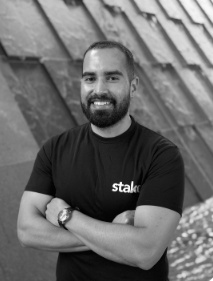
About the author
Mattias has spent his career reporting on and writing about regulated financial and business topics.
He began as a Market Reporter at Argus Media, covering commodities markets, before moving to International Tax Review (ITR) as a Senior Reporter, where he covered international tax policy. He went on to serve as Global Editor at Suppleye and News Editor at Global Data Review, before joining Grant Thornton, a global accounting, tax and advisory firm, as Content Manager.
He's now Senior Content Writer at Stake, a DFSA- and CMA-regulated fractional real estate investment platform operating across the UAE, Saudi Arabia and international markets, where his reporting and editorial background informs his writing on real estate, finance and investing.
: Mattias Cruz
Mattias Cruz
Senior Content Writer